Restaurant food cost is one of the most important numbers for understanding whether a restaurant is operating profitably. It shows how much of your food sales is being used to cover the cost of ingredients.
For a restaurant, food cost percentage is calculated by dividing the cost of food used by food sales and multiplying by 100.
Restaurant Food Cost Formula:
Food Cost % = (Beginning Inventory + Purchases − Ending Inventory) ÷ Food Sales × 100
For individual menu items, the calculation is different:
Item Food Cost % = Ingredient Cost ÷ Selling Price × 100
Tracking both numbers helps restaurant owners understand whether ingredient costs, portion sizes, purchasing, wastage, and menu pricing are under control.
What Is Restaurant Food Cost?
Restaurant food cost is the amount a restaurant spends on ingredients and raw materials used to prepare the food it sells.
It can include items such as:
- Vegetables and fruits
- Meat, chicken and seafood
- Dairy products
- Rice, flour and grains
- Cooking oil
- Spices and sauces
- Other ingredients used in food preparation
Food cost is different from total restaurant expenses. Labour, rent, electricity, delivery commissions, marketing and other operating expenses are not included in the basic food cost calculation.
For restaurant owners, monitoring food cost helps answer an important question:
“How much of my food revenue is being spent on ingredients?”
A rising food cost percentage can indicate increasing supplier prices, excessive wastage, inconsistent portioning, poor inventory control, or menu prices that no longer reflect ingredient costs.
What Is Restaurant Food Cost Percentage?
Restaurant food cost percentage represents the percentage of food sales spent on the ingredients used to produce that food.
For example, if a dish sells for ₹300 and the ingredients cost ₹90, the food cost percentage is:
₹90 ÷ ₹300 × 100 = 30%
This means ₹30 out of every ₹100 in sales is being used to cover ingredient cost.
For the entire restaurant, food cost is normally measured over a specific period using inventory and purchase values. This gives a more realistic picture of actual food consumption than looking only at individual recipe costs.
How to Calculate Restaurant Food Cost
The standard restaurant food cost calculation uses four important figures:
- Beginning inventory
- Purchases during the period
- Ending inventory
- Food sales during the same period
Restaurant Food Cost Formula
Food Cost % = (Beginning Inventory + Purchases − Ending Inventory) ÷ Food Sales × 100
Step 1: Calculate Beginning Inventory
Determine the value of all food ingredients available at the beginning of your selected period.
For example:
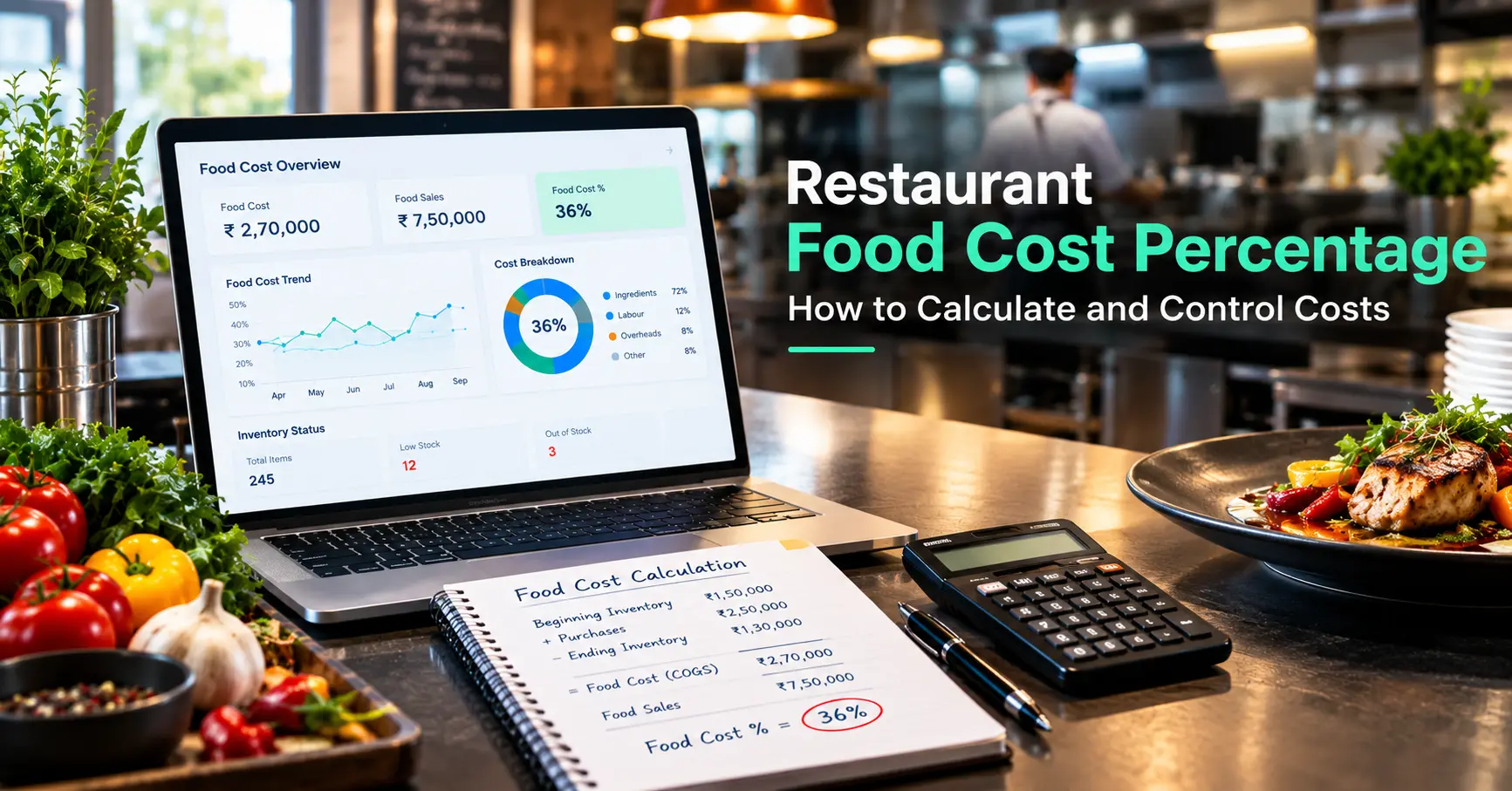
Beginning Inventory = ₹1,50,000
Step 2: Add Purchases
Add the value of all food-related purchases made during the same period.
Purchases = ₹2,50,000
Step 3: Subtract Ending Inventory
At the end of the period, calculate the value of the remaining food inventory.
Ending Inventory = ₹1,30,000
The cost of food used is:
₹1,50,000 + ₹2,50,000 − ₹1,30,000 = ₹2,70,000
Step 4: Divide by Food Sales
Suppose the restaurant generated:
Food Sales = ₹7,50,000
Then:
Food Cost % = ₹2,70,000 ÷ ₹7,50,000 × 100
Food Cost Percentage = 36%
This means the restaurant used approximately 36% of its food sales to cover the cost of food consumed during the period.
The key is to use inventory, purchases and food sales from the same measurement period and apply the same counting method consistently.
How to Calculate Food Cost for an Individual Dish
Restaurant owners should also calculate food cost at the menu-item level.
The formula is:
Food Cost % = Total Ingredient Cost ÷ Menu Selling Price × 100
For example, consider a paneer dish:
- Paneer and other ingredients: ₹92
- Selling price: ₹280
₹92 ÷ ₹280 × 100 = 32.9%
This calculation helps identify dishes with unusually high ingredient costs.
It is especially useful when:
- Creating a new menu
- Reviewing existing menu prices
- Comparing dishes
- Standardizing portions
- Identifying low-margin items
- Updating recipes after supplier price changes
Item-level costing and restaurant-level food cost answer different questions. Item-level costing shows what a dish should cost, while period-level food cost shows what the restaurant actually consumed.
Why Is Restaurant Food Cost Increasing?
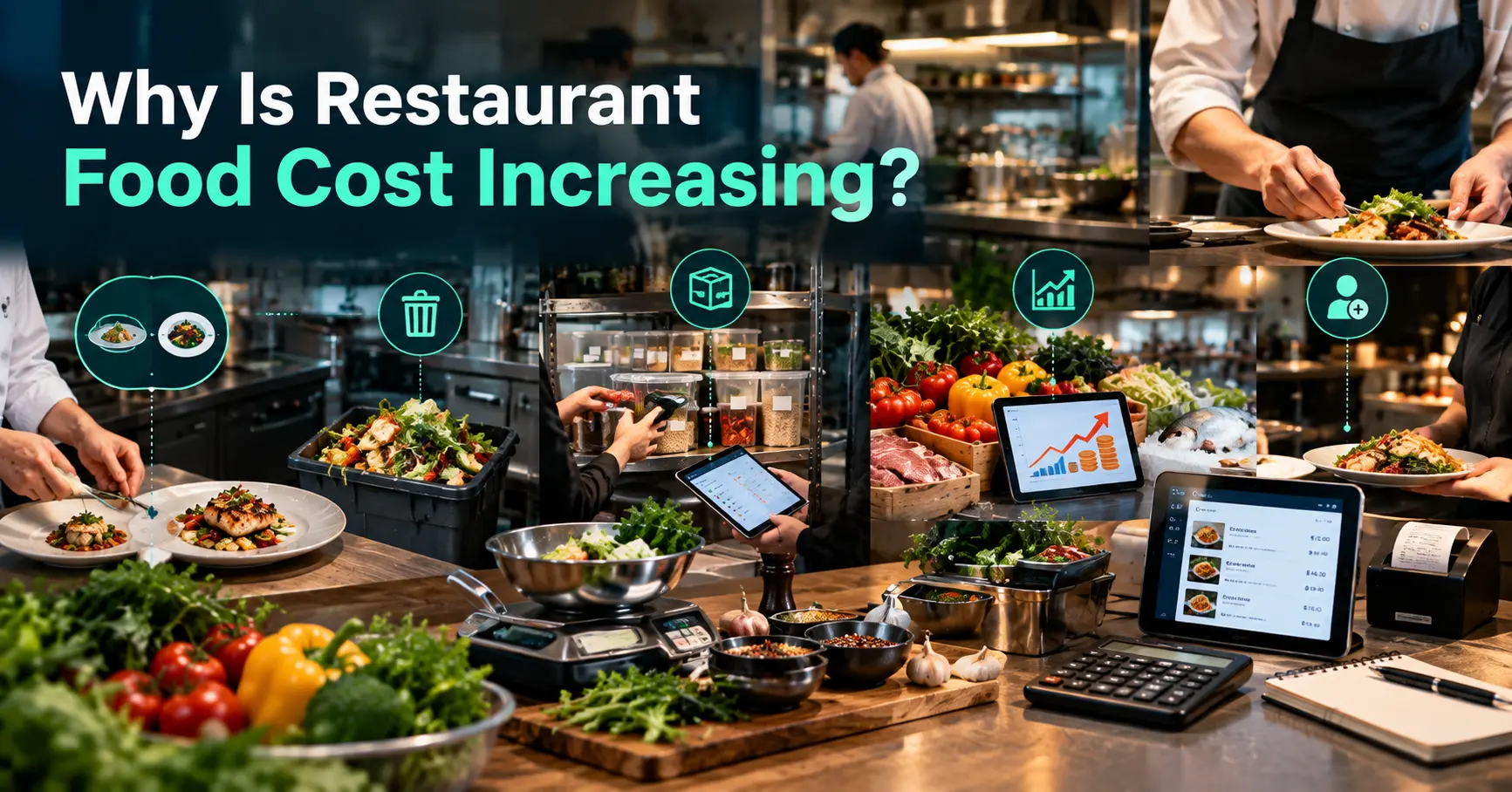
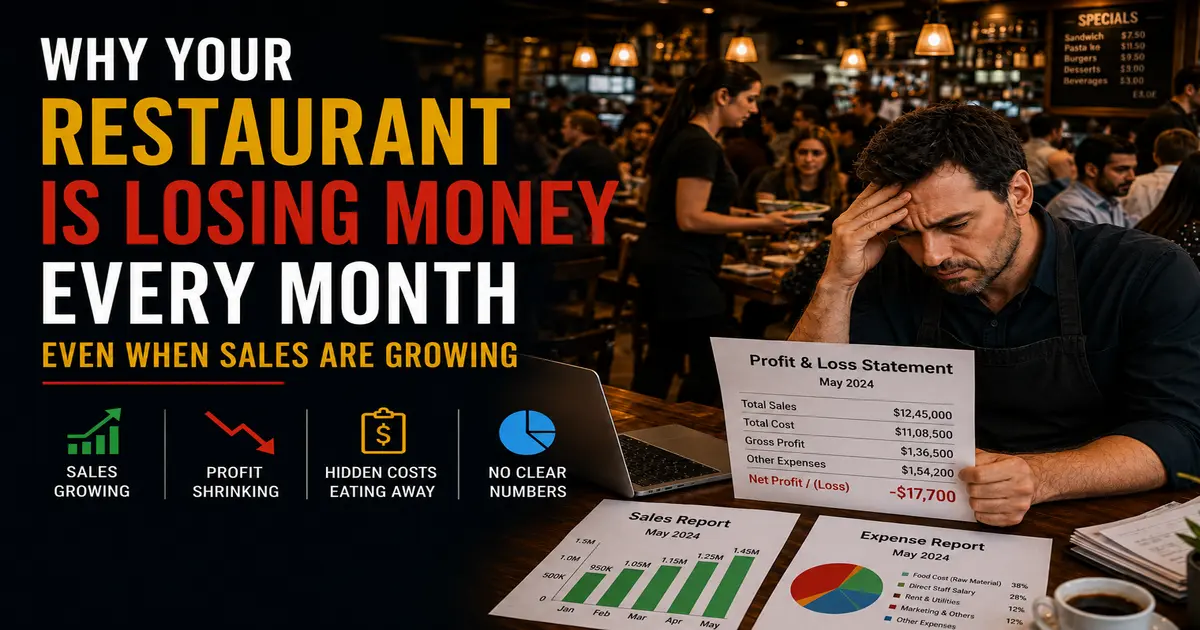
A restaurant's food cost can increase even when sales are growing.
Common reasons include:
1. Inconsistent Portion Sizes
If employees use different quantities of ingredients for the same dish, the actual ingredient cost can become higher than the recipe cost.
2. Food Wastage
Spoiled vegetables, expired ingredients, preparation waste, overproduction and discarded food can increase the actual cost of food used.
3. Poor Inventory Tracking
Without accurate stock information, restaurants may over-purchase some ingredients while running short of others.
4. Rising Supplier Prices
Changes in the prices of vegetables, dairy, meat, seafood, cooking oil and other ingredients can gradually increase recipe costs.
5. Incorrect Menu Pricing
If ingredient prices increase but menu prices remain unchanged, the food cost percentage can rise.
6. Unrecorded Consumption
Staff meals, complimentary items, damaged stock and internal consumption should be tracked consistently. Otherwise, the difference between expected and actual food usage can become difficult to identify.
How to Reduce Food Cost in a Restaurant
Reducing restaurant food cost does not always mean buying cheaper ingredients. The better approach is to control how ingredients are purchased, stored, used and sold.
Standardize Recipes
Use consistent ingredient quantities for every menu item. Standard recipes make portion control easier and create more reliable food-cost calculations.
Monitor Inventory Regularly
Track opening stock, purchases, consumption and closing stock consistently. Regular stock checks make unusual changes easier to identify.
Track Food Wastage
Record damaged, expired, spoiled and excess food. Reviewing wastage regularly helps identify recurring problems.
Control Portion Sizes
Use standard serving quantities so every customer receives a consistent portion and the restaurant avoids unnecessary ingredient usage.
Review Supplier Costs
Compare purchase prices regularly and monitor changes in the cost of major ingredients.
Review Menu Pricing
If the cost of an ingredient increases significantly, check whether the menu price still provides an acceptable margin.
Compare Actual and Expected Food Cost
A difference between what ingredients should have been consumed and what was actually consumed can indicate wastage, portion variance, stock discrepancies or recording issues.
Control Restaurant Food Costs with Restosoft
Calculating food cost tells you what happened. The right restaurant management software helps you understand what is driving it.
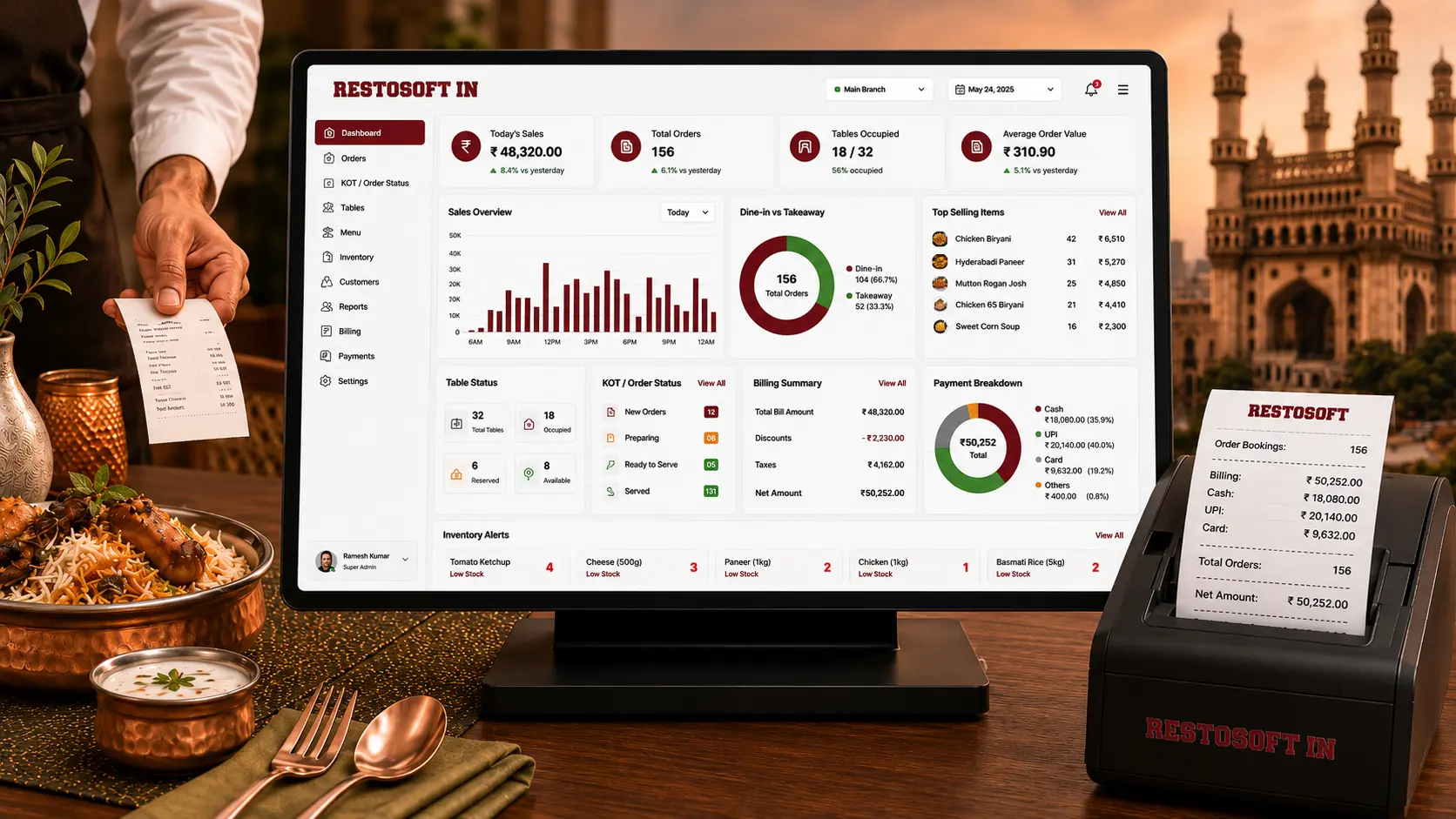
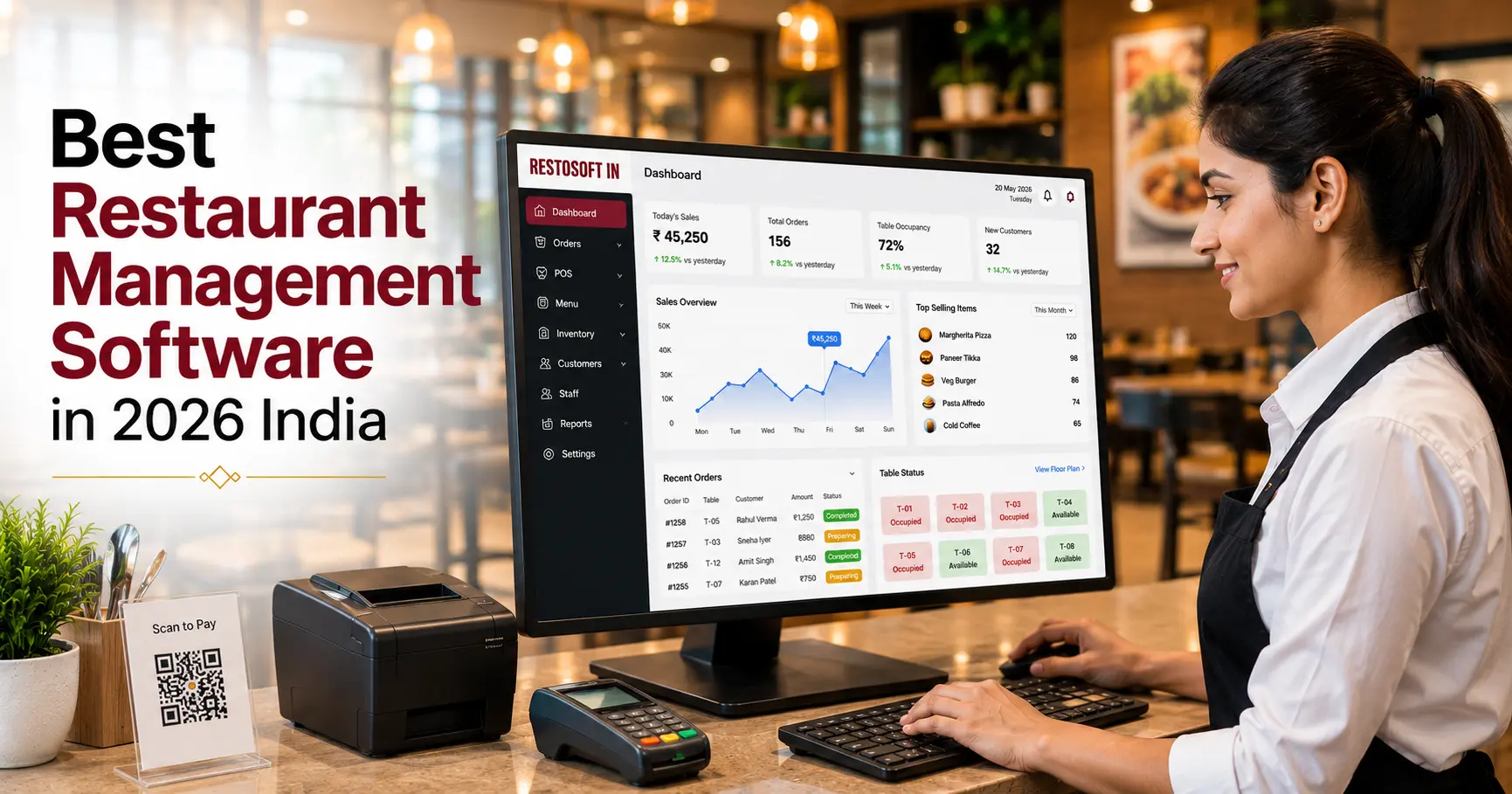
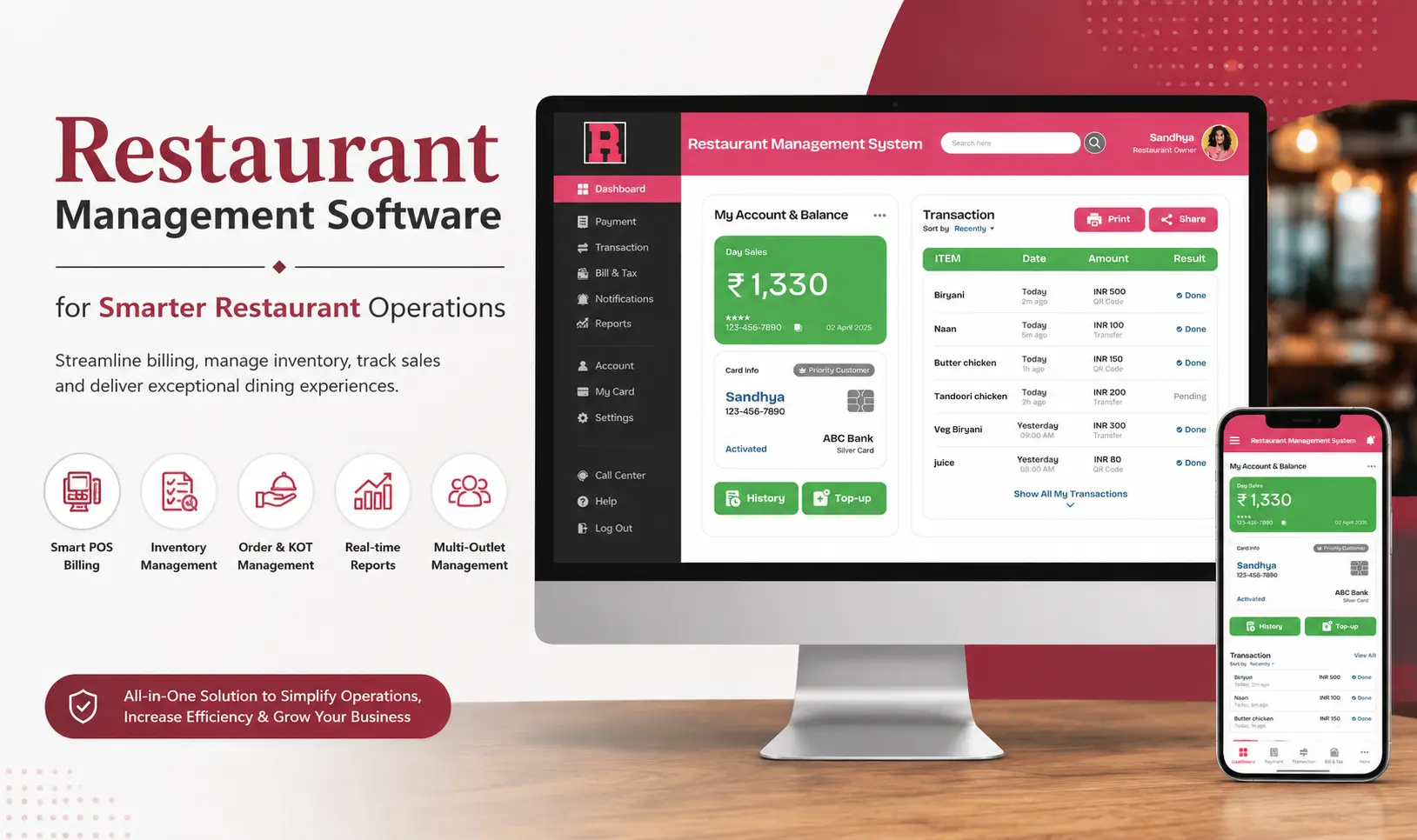
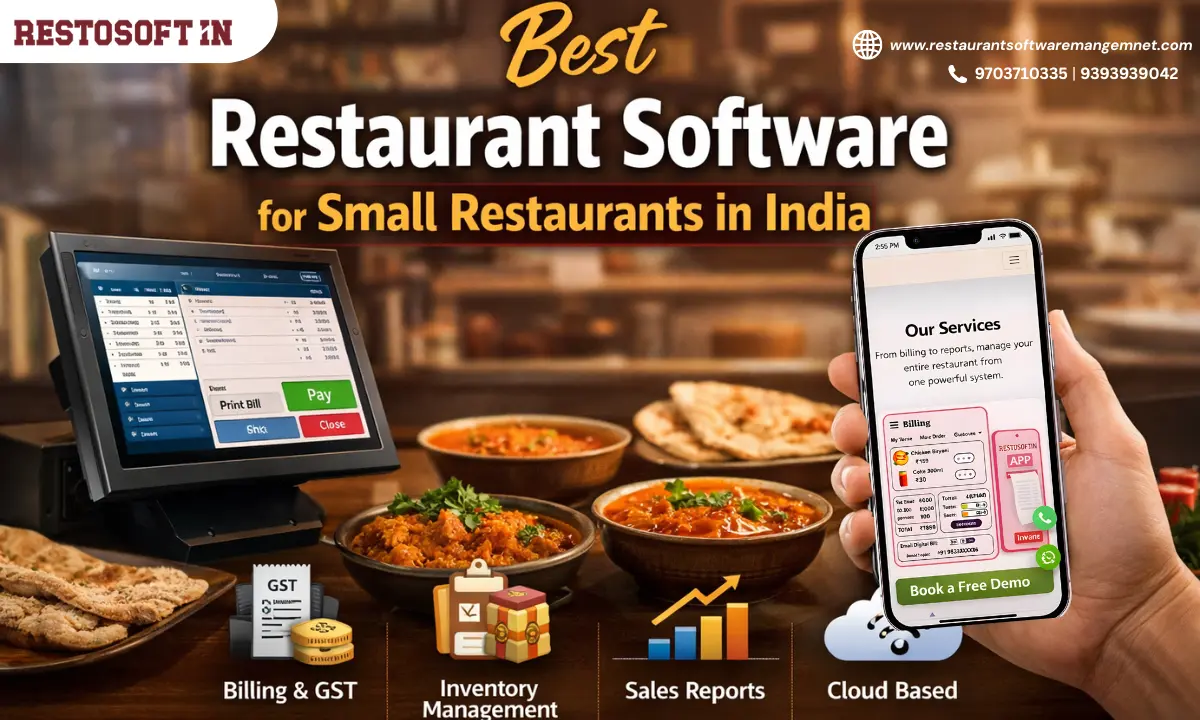
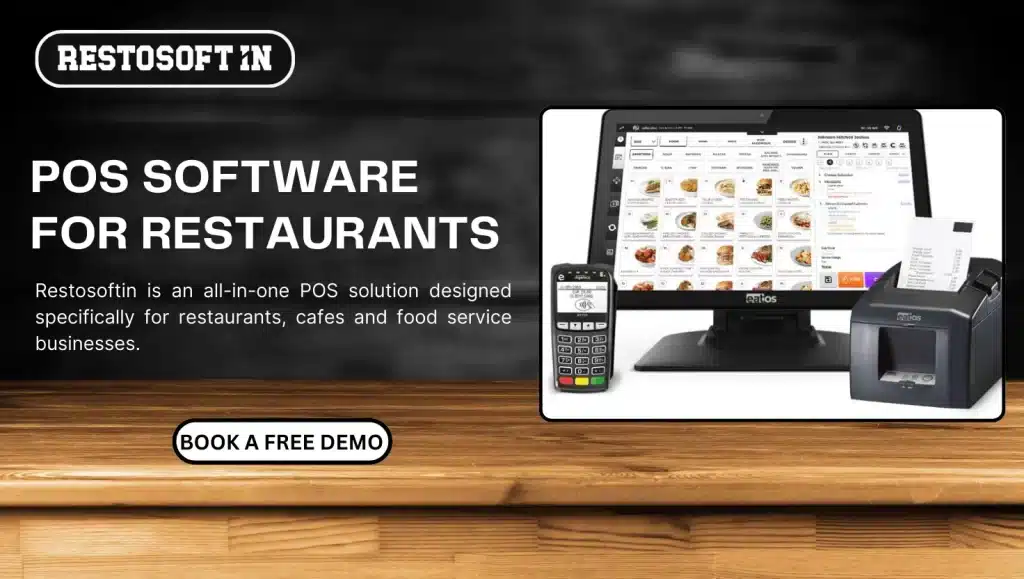
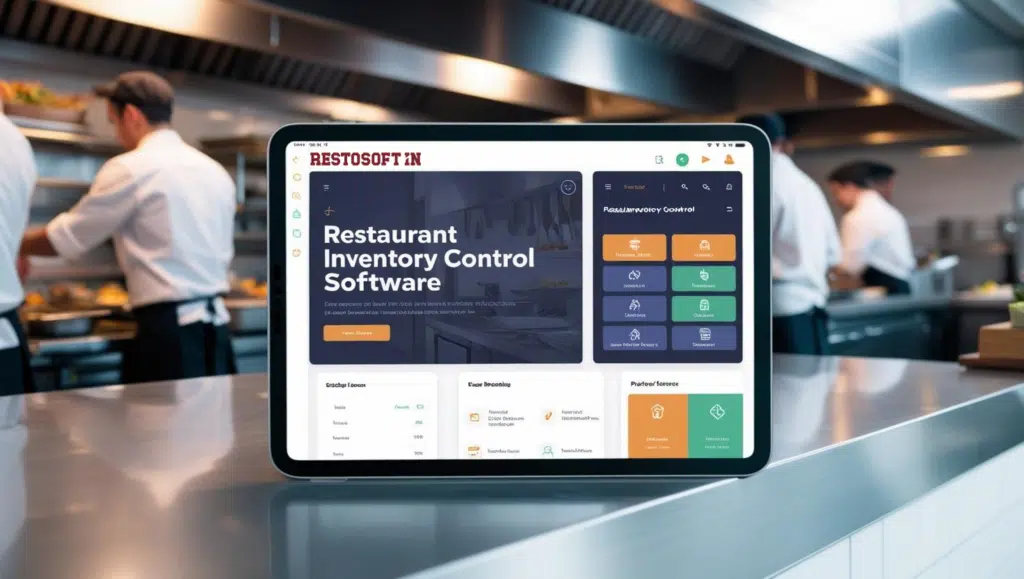
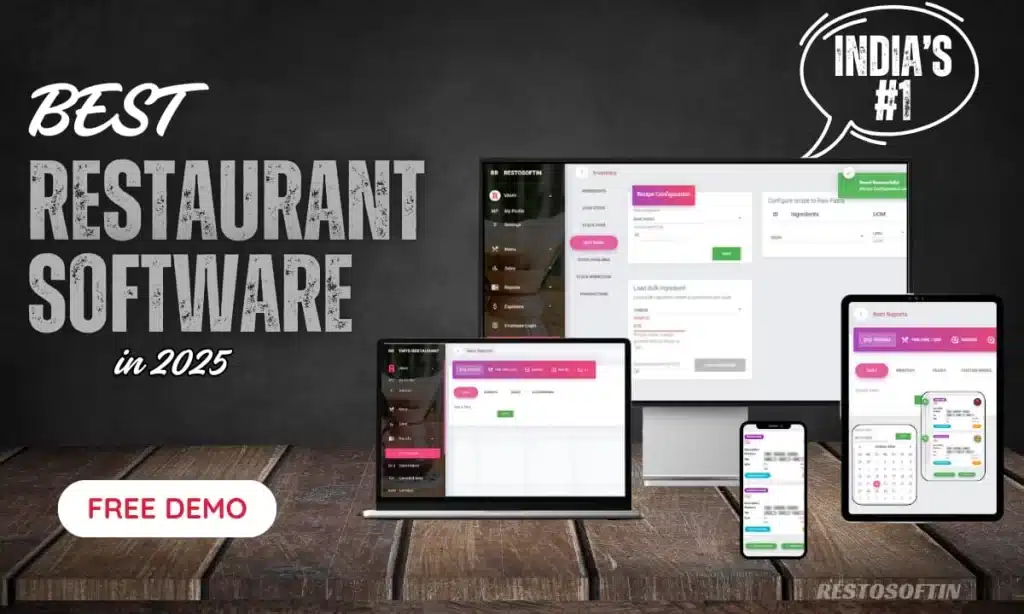
Restosoft connects restaurant billing, inventory tracking and business reporting through a centralized restaurant management system. Its features include automated inventory tracking, billing, menu management and reporting.
Connect Sales with Inventory
When billing and inventory information work together, restaurant owners get better visibility into stock movement and ingredient usage.
Restosoft supports automated inventory tracking, helping restaurants monitor stock levels and manage supplies more efficiently.
Reduce Portioning Variance
Restosoft existing food-cost workflow supports recipe-linked billing, where menu items can be mapped to ingredient quantities and sales can automatically update stock. This helps restaurants compare expected ingredient consumption with actual inventory movement.
Monitor Wastage and Stock Issues
Food wastage becomes easier to identify when inventory movement is tracked consistently. Low-stock visibility and inventory reports can also help restaurant managers make better purchasing decisions.
Make Decisions Using Restaurant Reports
Instead of depending on spreadsheets and disconnected records, restaurant owners can use centralized reports to monitor sales, inventory and operational performance.
This makes it easier to identify:
- High-cost ingredients
- Stock movement
- Wastage patterns
- Sales performance
- Menu-level cost issues
- Operational variances
The goal is not simply to calculate a lower food-cost percentage. The goal is to understand the numbers and act before small cost increases become major profit losses.
If your restaurant is still managing billing, inventory and food-cost tracking manually, Restosoft can help bring these operations together in one system.
Book a Free Restosoft Demo and see how centralized billing, inventory tracking and reporting can improve operational visibility.
Restaurant Food Cost Checklist
Use this checklist to keep food costs under control:
- Calculate food cost using the correct formula.
- Keep inventory counts consistent.
- Record all food purchases.
- Standardize recipes and portions.
- Track wastage regularly.
- Review ingredient prices.
- Compare actual and theoretical food costs.
- Review high-cost menu items.
- Monitor food cost trends regularly.
- Use centralized reporting for better operational visibility.