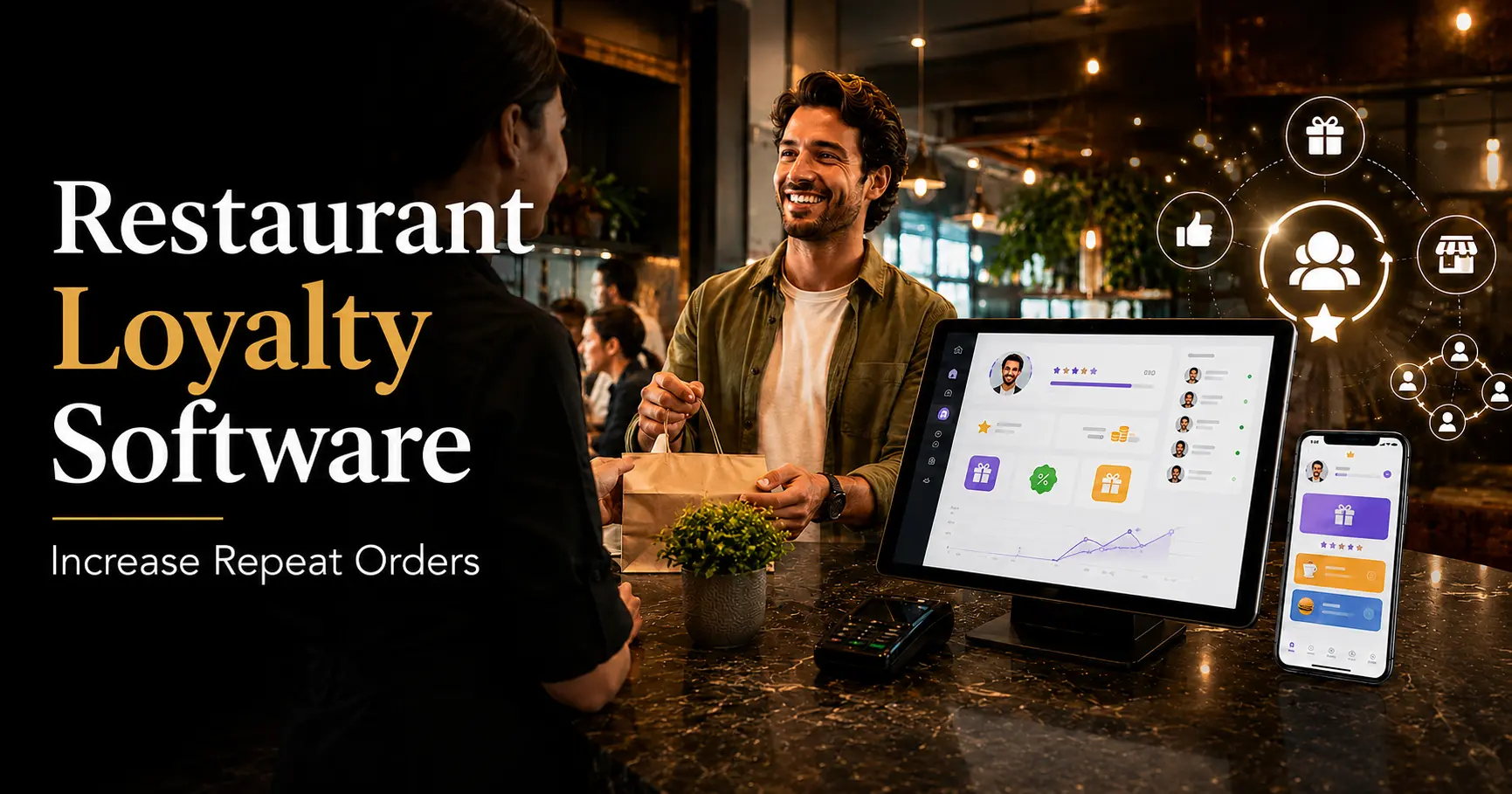
Managing repeat customers today involves more than remembering regulars by face. Restaurants regularly handle customer recognition, point tracking, offer timing, redemption at billing, and multi-branch visit history. As restaurant businesses continue to expand across outlets, tracking loyalty manually through paper punch cards or one-off SMS blasts starts to break down.
Businesses searching for restaurant loyalty software solutions often look for systems that automatically recognize returning guests, trigger the right offer at the right time, and report repeat-order performance without extra manual work.
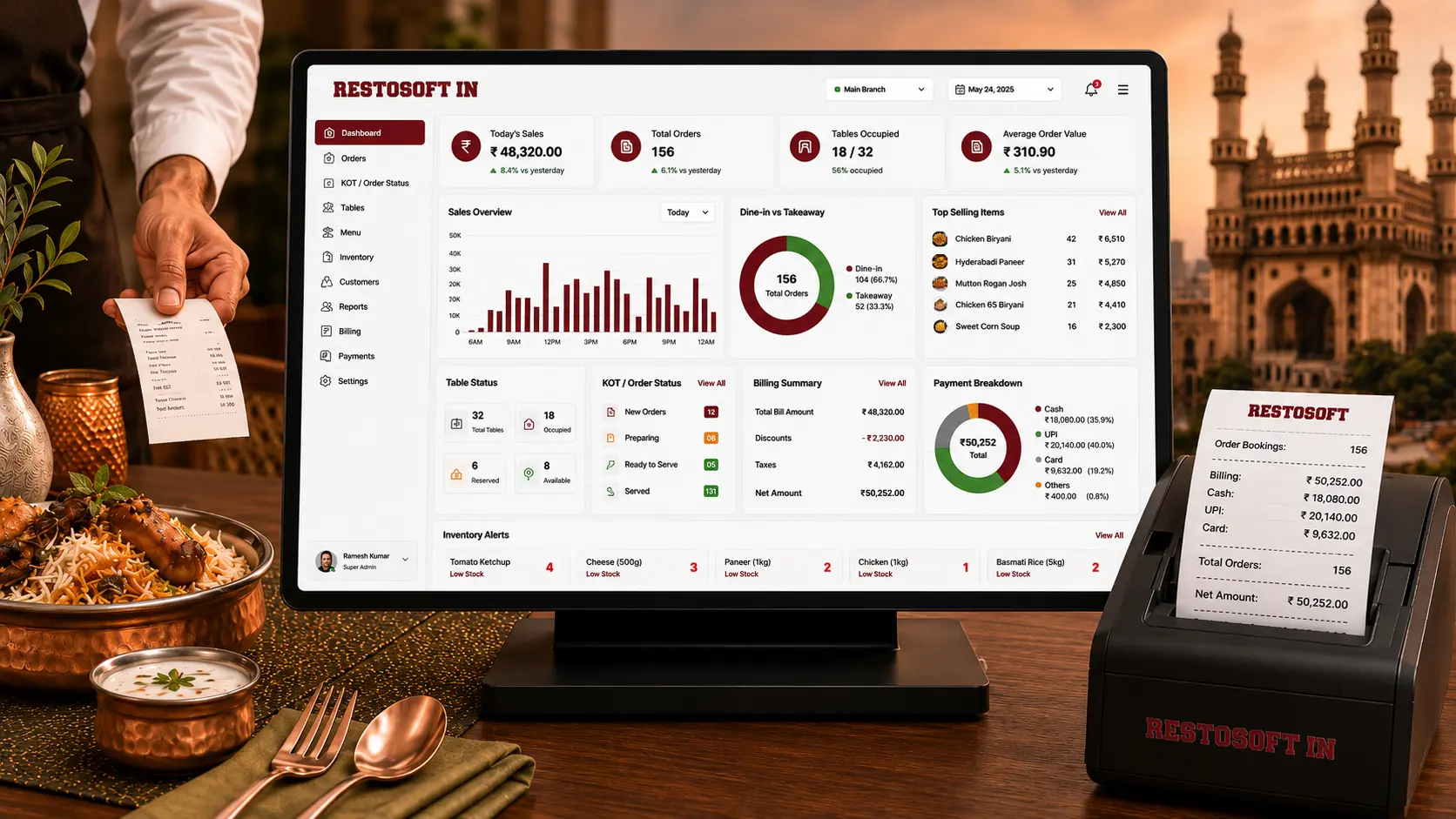
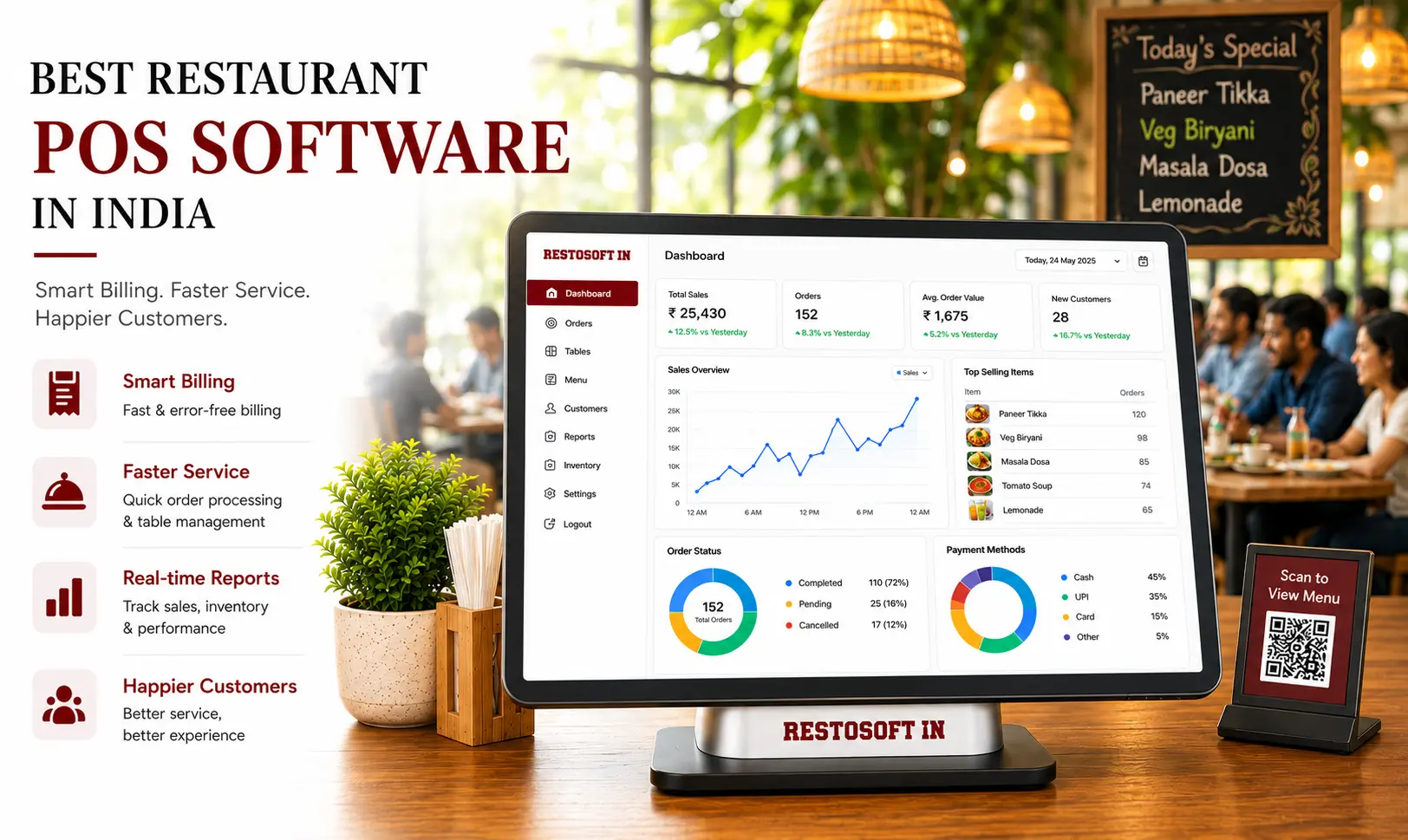
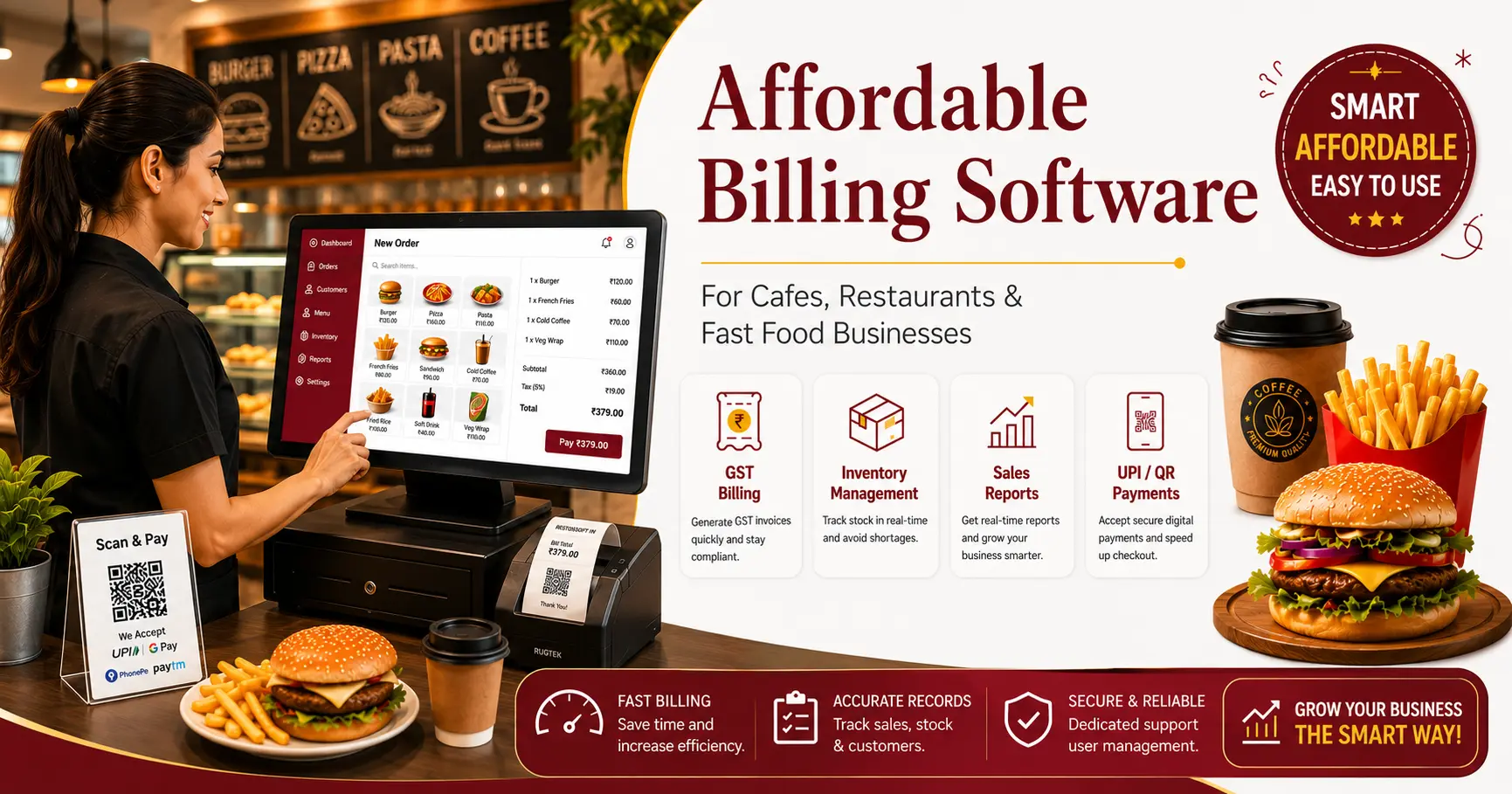
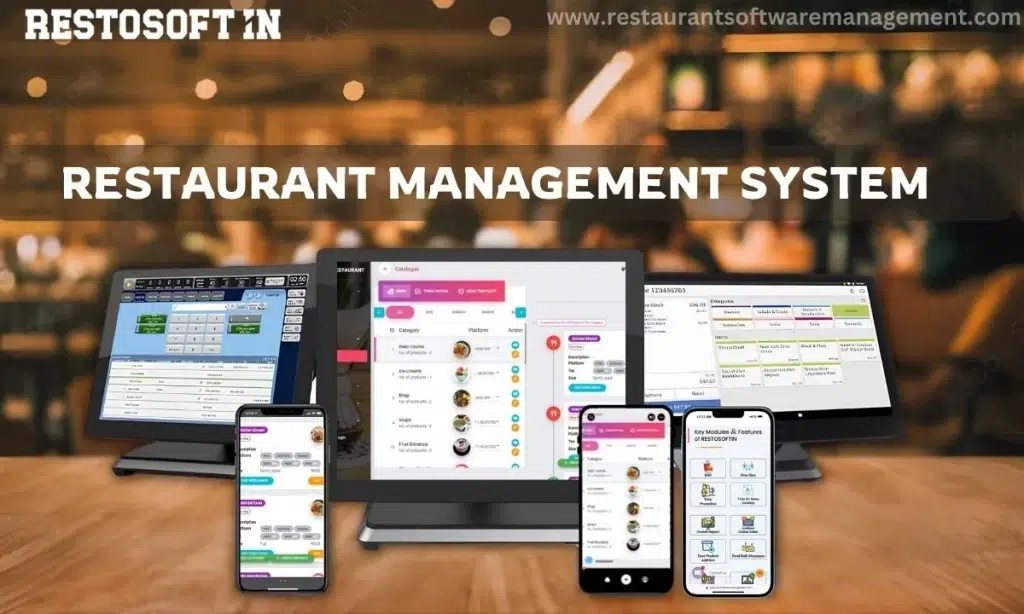
Restosoft helps restaurants improve repeat-customer retention through centralized solutions for billing, customer databases, reporting, and daily restaurant workflows the same dashboard already running your billing and reports.
Key Takeaways
- Higher repeat-visit rate without added ad spend
- Automatic customer recognition across every branch
- Behavior-triggered offers (win-back, birthday, near-reward nudges)
- Staff-facing redemption at the billing screen
- Owner-facing loyalty reporting alongside sales reports
- Centralized customer data across single or multi-outlet operations
- Better repeat-customer visibility for CEO-level reporting
What Is Restaurant Loyalty Software and Why Do Restaurants Need It?
Restaurant loyalty software is a system that automatically recognizes returning customers, tracks their visits and spend, and triggers reward offers points, cashback, or tier benefits without manual tracking.
Restaurants managing repeat customers face a recurring problem: a guest who visits three times a month looks identical to a first-time walk-in if there's no system connecting their orders together. Staff can't personally remember every regular once a restaurant crosses a certain size, and across multiple outlets it becomes impossible.
For example, a restaurant chain with outlets in two cities may have the same family dining at both locations but without a shared customer database, each outlet treats them as a new customer every time, losing the chance to recognize and reward loyalty.
Instead of relying on paper stamp cards or manual SMS lists, loyalty software centralizes customer recognition into the same dashboard already used for billing and reporting.
Common Challenges Restaurants Face Without Loyalty Software
Restaurants experiencing flat repeat-visit rates, disconnected customer records, and unmeasured loyalty spend often adopt restaurant loyalty software to fix these gaps.
| Operational Challenge | Impact on Restaurants | How Loyalty Software Helps |
|---|---|---|
| No cross-branch customer recognition | Regulars treated as new customers at other outlets | Centralized customer database across branches |
| Manual point/stamp tracking | Errors, staff time lost, easy to forge | Automatic point tracking at billing |
| Offers sent on a fixed calendar | Low relevance, poor redemption | Behaviour-triggered offers (visit-gap, birthday) |
| No visibility into loyalty ROI | Owners can't tell which offers work | Loyalty reporting alongside sales reports |
| Redemption is a separate manual step | Staff skip it during rush hours | One-tap redemption at the billing screen |
Missed Repeat Customers
Restaurants often lose track of which customers are repeat visitors once volume grows beyond a handful of regulars.
For example, a guest who dined at your outlet four times last month may never be offered anything different from a first-time visitor, simply because no one flagged the pattern.
Loyalty automation helps restaurants catch this and act on it.
Reporting Blind Spots on Repeat Revenue
Many businesses searching for restaurant loyalty software prioritize systems that show, clearly, how much revenue is coming from repeat guests versus new footfall the same reporting discipline covered in Why Reports Is Essential for Restaurant Success.
Restaurant Loyalty Software: Features Businesses Should Consider
Restaurants should consider loyalty software that supports cross-branch customer identity, configurable reward triggers, staff-facing redemption, and owner-facing reporting all inside the same platform running billing and inventory.
| Restaurant Requirement | Software Feature | Business Outcome |
|---|---|---|
| Recognize returning guests | Cross-branch customer database | No lost repeat-customer history |
| Reward structure matching outlet type | Points, tiers, or cashback options | Better fit for QSR, cafe, fine-dine, bar formats |
| Timely, relevant offers | Behaviour-triggered rules (visit-gap, birthday, near-threshold) | Higher redemption vs calendar-based SMS |
| Fast billing-counter redemption | One-tap loyalty lookup at POS | Staff actually use it during rush hours |
| Owner visibility | Loyalty reporting dashboard | Clear repeat-revenue numbers for decision-making |
Automatic Customer Recognition
What is automatic customer recognition in restaurant loyalty software?
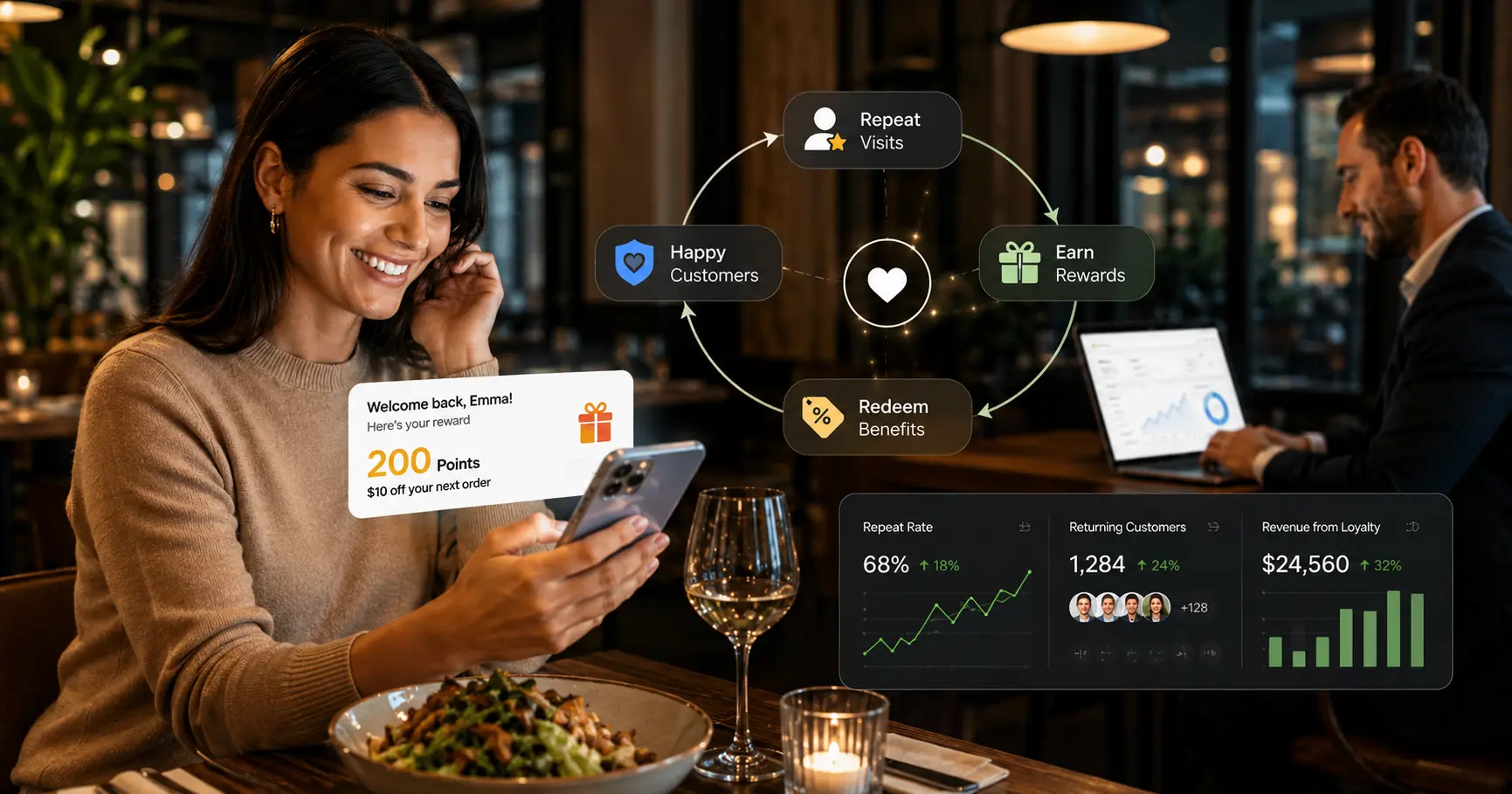
Automatic customer recognition matches a guest to their existing profile by phone number or card at the point of billing, instead of creating a duplicate record every visit.
Restaurants processing dine-in, takeaway, and delivery orders simultaneously often lose track of which customers are repeat visitors if recognition depends on staff memory alone.
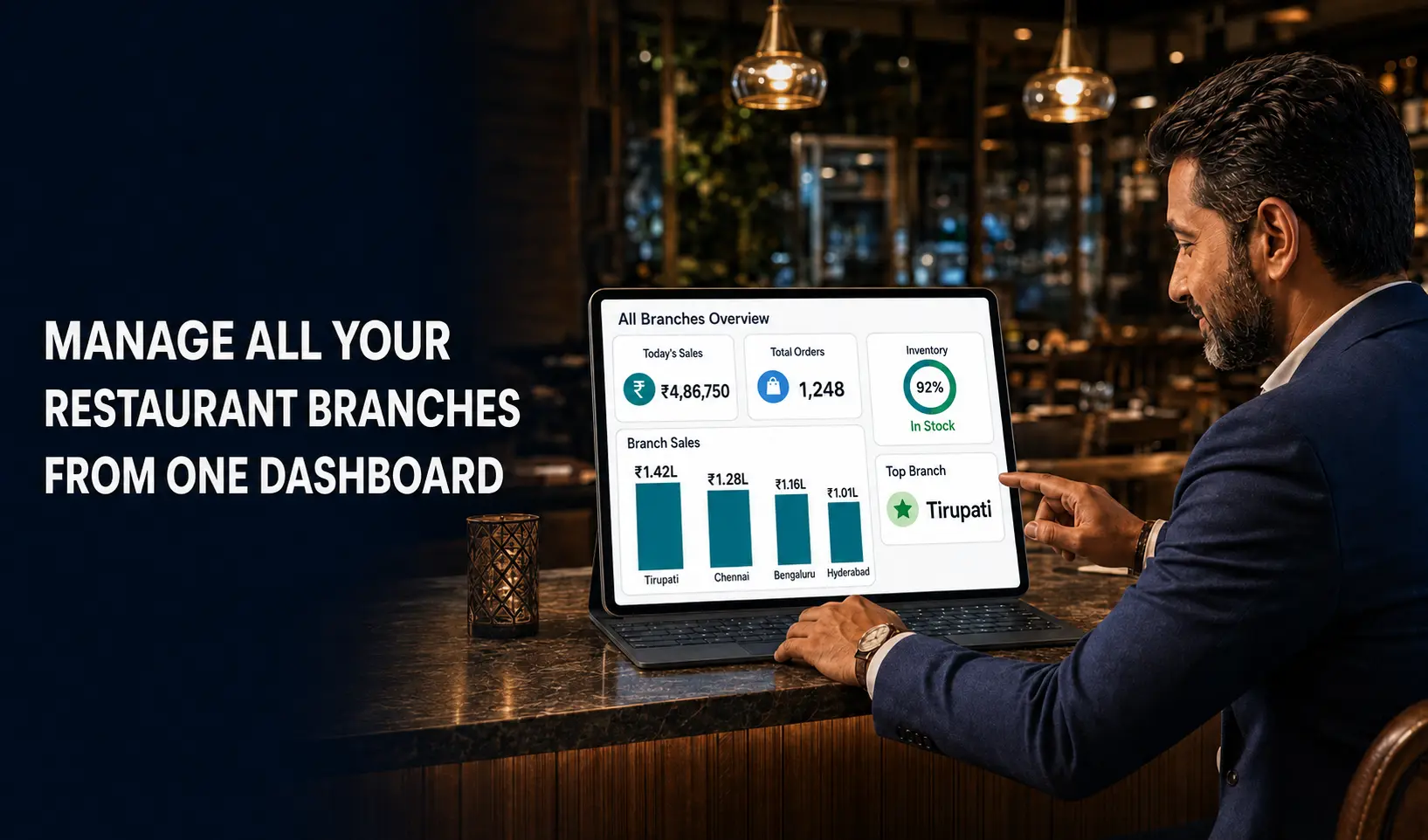
For example, a multi-outlet restaurant chain can recognize the same guest whether they visit the Chennai branch or the Hyderabad branch, because the customer record lives in one shared database rather than per-outlet spreadsheets.
Business Benefits:
✔ No duplicate customer records
✔ Recognition works across every branch
✔ No dependency on staff memory
Reward Structure (Points, Tiers, Cashback)
How do restaurants choose the right loyalty reward format?
The reward format should match the outlet type points-per-visit for high-frequency formats like QSR and cafes, tiered membership for fine-dine and multi-outlet chains, and cashback for family restaurants and bar & brewery formats.
Restaurants running a single reward structure regardless of outlet type often see poor adoption, since a punch-card reward that works for a cafe doesn't translate to a fine-dining guest's expectations.
Business Benefits:
✔ Reward format matched to guest expectations
✔ Higher program adoption across outlet types
✔ Easier to explain to staff and customers
Behaviour-Triggered Offers
Why do trigger-based offers perform better than calendar-based SMS?
Trigger-based offers activate automatically based on real customer behaviour such as 15–20 days since the last visit, an upcoming birthday, or being one visit away from a reward instead of going out to everyone on a fixed schedule.
Restaurants sending generic weekly SMS blasts often see low redemption because the offer isn't relevant to where each customer actually is in their visit cycle.
Business Benefits:
✔ Higher offer relevance and redemption
✔ Automatic win-back of lapsing customers
✔ No manual list-building required
Staff-Facing Redemption at Billing
Why does redemption need to happen at the billing screen?
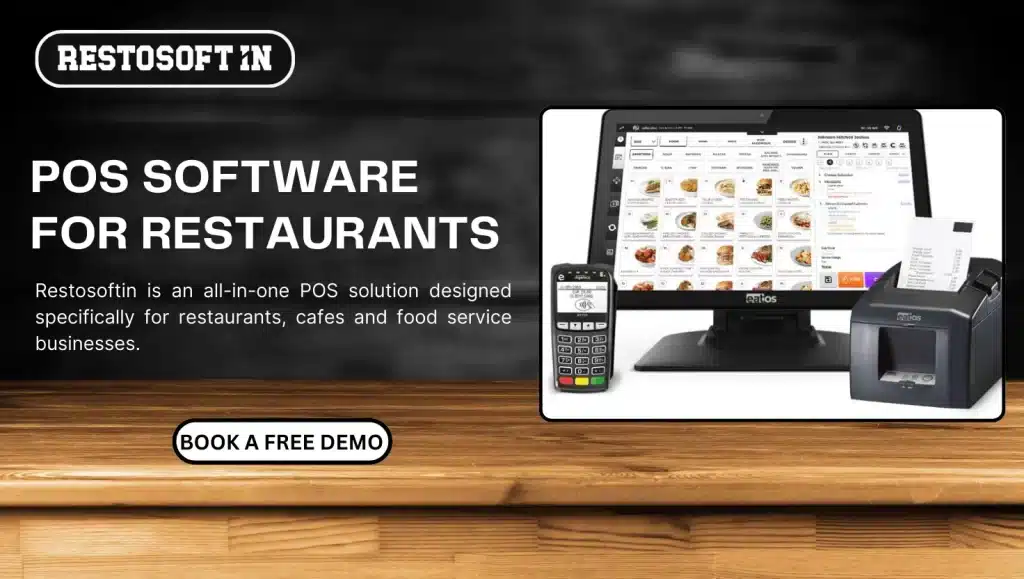
Redemption tied directly into the billing screen lets staff apply a guest's loyalty status in one tap during checkout, instead of requiring a separate app or manual lookup.
Restaurants where redemption is a slow, separate process often see staff skip it entirely during peak hours, which quietly kills the program's usefulness regardless of how good the offers are.
Business Benefits:
✔ Higher staff adoption of the program
✔ Faster billing during peak hours
✔ Consistent guest experience across shifts
Loyalty Reporting for Owners
Why is loyalty reporting important for restaurant owners?
Loyalty reporting shows owners repeat-visit rate, redemption rate, and revenue from loyalty members versus walk-ins the numbers needed to judge whether the program is actually working.
Restaurant owners frequently need this data for CEO-level review meetings and monthly performance reports. Without a connected dashboard, loyalty data sits disconnected from the sales reports that drive real decisions.
Business Benefits:
✔ Clear repeat-revenue numbers for reporting
✔ Data tied to the same dashboard as sales and inventory
✔ Easier month-to-month program evaluation
How Loyalty Software Improves Daily Restaurant Operations
Restaurants handling dine-in, takeaway, and delivery guests across one or more outlets use loyalty software for centralized repeat-customer management, the same way they already centralize multi-outlet billing and reporting.
| Restaurant Activity | Manual Process | Software-Based Process |
|---|---|---|
| Recognizing repeat guests | Staff memory, per-outlet only | Automatic, cross-branch recognition |
| Sending offers | Manual SMS/WhatsApp blasts | Automated, behaviour-triggered offers |
| Applying rewards at billing | Separate punch card or manual note | One-tap redemption at POS |
| Measuring loyalty performance | No visibility, or a separate spreadsheet | Loyalty dashboard next to sales reports |
| Multi-branch guest tracking | Impossible to track manually | Centralized customer database |
Morning Operations
Staff review the previous day's loyalty activity — new sign-ups, redemptions, and any guests due for a win-back offer — as part of the same morning check restaurants already run for inventory and stock levels.
Afternoon & Peak Hour Operations
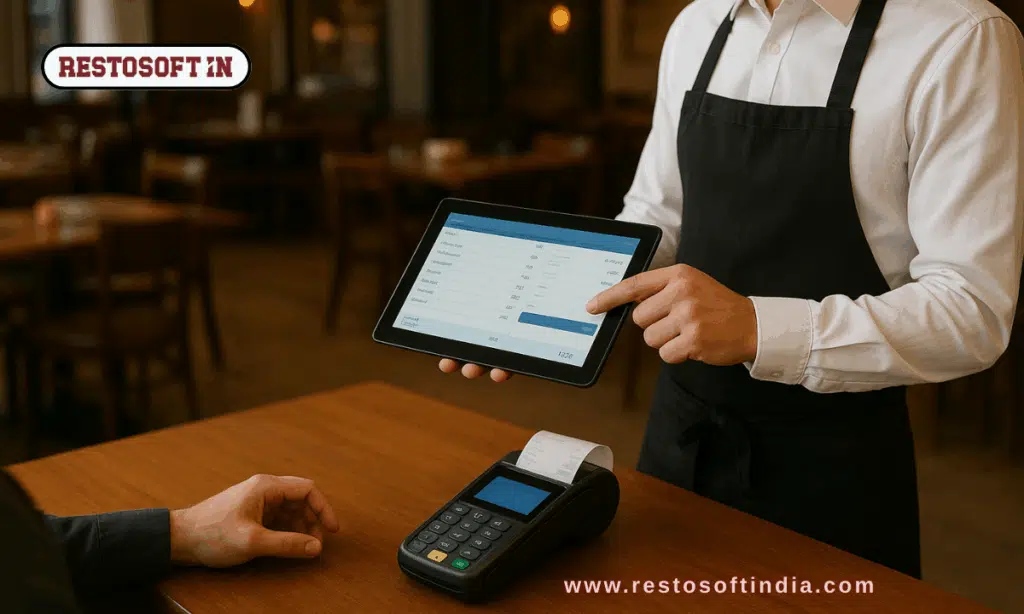
At billing, staff see loyalty status and apply rewards in one tap without slowing down service critical during lunch and dinner rushes when speed matters most.
End-of-Day Operations
Managers review repeat-visit and redemption numbers alongside daily sales reports, spotting which offers are actually converting.
How to Choose the Right Restaurant Loyalty Software
Restaurants should select loyalty software based on cross-branch identity matching, configurable trigger rules, staff-facing redemption speed, and reporting that sits next to existing sales data not a standalone app disconnected from billing.
Choosing a loyalty add-on that doesn't talk to the existing POS often creates more manual work than it saves, since staff end up reconciling two systems instead of one. The right loyalty software should sit inside the same platform running billing, inventory, and reporting not as a separate, disconnected add-on.
Checklist for Choosing Restaurant Loyalty Software:
✔ Cross-branch customer identity matching
✔ Configurable trigger rules (visit-gap, birthday, near-threshold)
✔ One-tap redemption at the billing screen
✔ Loyalty reporting next to sales and inventory reports
✔ Works with existing menu and billing systems
✔ Support for multi-location rollouts
Conclusion
Repeat customers drive restaurant revenue more reliably than new acquisition ever will but only when the system recognizes them, reaches out at the right moment, and gives owners clear visibility into what's working. RestosoftIN centralized billing, customer database, and reporting tools give restaurants the foundation to track repeat customers and build loyalty into daily operations, rather than treating it as a separate initiative.
Contact Restosoft
Website: Restosoft Official Website
Phone: 8688784231
Email: restosoftinsales@gmail.com
Get a Free Demo to see how RestosoftIN billing, customer database, and reporting tools support your restaurant's operations.